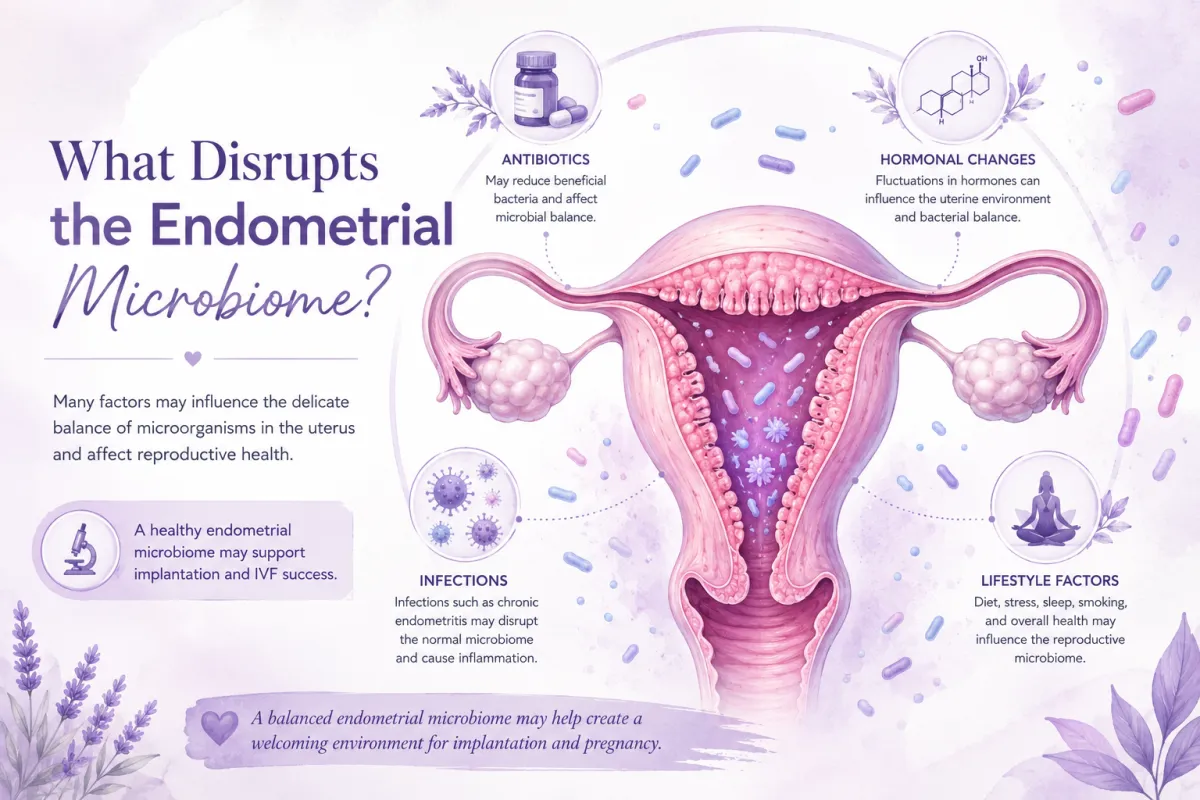
What Disrupts the Endometrial Microbiome?
What Disrupts the Endometrial Microbiome?
The endometrial microbiome is a community of microorganisms that naturally live inside the uterus. Although research is still evolving, scientists are learning that maintaining a healthy balance of these bacteria may play an important role in reproductive health and successful embryo implantation.
Just like the gut microbiome, the uterine microbiome is dynamic. It can change over time and may be influenced by a variety of factors. Understanding these influences may help patients have more informed conversations with their fertility specialists.
Antibiotics
Antibiotics are essential medications for treating bacterial infections, but they do not distinguish between harmful and beneficial bacteria. While antibiotics can eliminate infection, they may also temporarily alter the balance of normal bacteria throughout the body, including the reproductive tract.
For most people, beneficial bacteria gradually recover after treatment. However, repeated or prolonged antibiotic use may affect the diversity of the microbiome.
Hormonal Changes
Hormones influence many aspects of reproductive health, including the environment within the uterus. Estrogen, in particular, appears to support the growth of beneficial Lactobacillus species, which are commonly associated with a healthy reproductive tract.
Because hormone levels naturally fluctuate during the menstrual cycle—and are intentionally altered during fertility treatment—the endometrial microbiome may also change over time.
Infections
Certain bacterial infections may disrupt the normal balance of microorganisms within the uterus. One condition receiving increased attention is chronic endometritis, a persistent inflammation of the endometrial lining that may occur with few or no noticeable symptoms.
Some studies suggest that diagnosing and treating chronic endometritis when appropriate may improve the uterine environment before embryo transfer, although researchers continue to study its impact on IVF outcomes.
Lifestyle Factors
Researchers are also exploring whether lifestyle factors influence the reproductive microbiome. Areas under investigation include:
Diet
Smoking
Stress
Sleep quality
Overall health
Although no single lifestyle change has been proven to directly improve the endometrial microbiome, maintaining good overall health supports reproductive wellness and may contribute to a healthier environment for conception.
Why This Matters for IVF
Embryo quality is only one part of a successful IVF cycle. The uterus must also provide a welcoming environment for implantation. Researchers are studying whether a balanced endometrial microbiome may contribute to this environment by supporting normal immune function and healthy communication between the embryo and the endometrium.
While many questions remain unanswered, this growing field of research is helping fertility specialists better understand why implantation sometimes succeeds and sometimes does not.
Key Takeaways
The endometrial microbiome can change over time.
Antibiotics, hormones, infections, and lifestyle may influence the balance of bacteria.
Researchers continue to study how these changes affect implantation and IVF outcomes.
Maintaining overall reproductive health remains an important part of fertility care.
Always discuss concerns about infections, medications, or fertility treatments with your healthcare provider.
References
Moreno I, Codoñer FM, Vilella F, et al. Evidence that the endometrial microbiota has an effect on implantation success or failure. American Journal of Obstetrics and Gynecology. 2016.
Kyono K, Hashimoto T, Kikuchi S, et al. A pilot study and case reports on endometrial microbiota and pregnancy outcome. Reproductive Medicine and Biology. 2019.