Before IVF: The History and Basics of IUI Treatment New Blog Post
Before IVF: The History and Basics of IUI Treatment
For couples struggling to conceive, Intrauterine Insemination (IUI) is often one of the first steps in assisted reproduction. It's less invasive than IVF and can be a promising option for the right candidates. Before jumping into complex protocols and lab-based fertilization, let’s take a step back and look at the history of IUI, how it works, and how it compares to IVF.
📜 A Brief History of IUI
The roots of IUI go back further than you might expect:
Late 1700s: The first known attempt at artificial insemination was recorded in London when a physician inseminated a woman with her husband’s sperm using a syringe.
1800s: Techniques were sporadically used in veterinary medicine and experimented with in humans.
1960s–1980s: As fertility clinics emerged and sperm washing techniques were developed, IUI became a more routine medical procedure.
Modern era: IUI is now widely used in fertility clinics as a first-line treatment for many types of infertility, especially when timing or cervical issues are suspected.
🧪 What Is IUI, and How Does It Work?
Intrauterine insemination is a simple procedure that places washed sperm directly into a woman’s uterus around the time of ovulation. The goal? To get as many high-quality sperm as close as possible to the egg at the exact right moment.
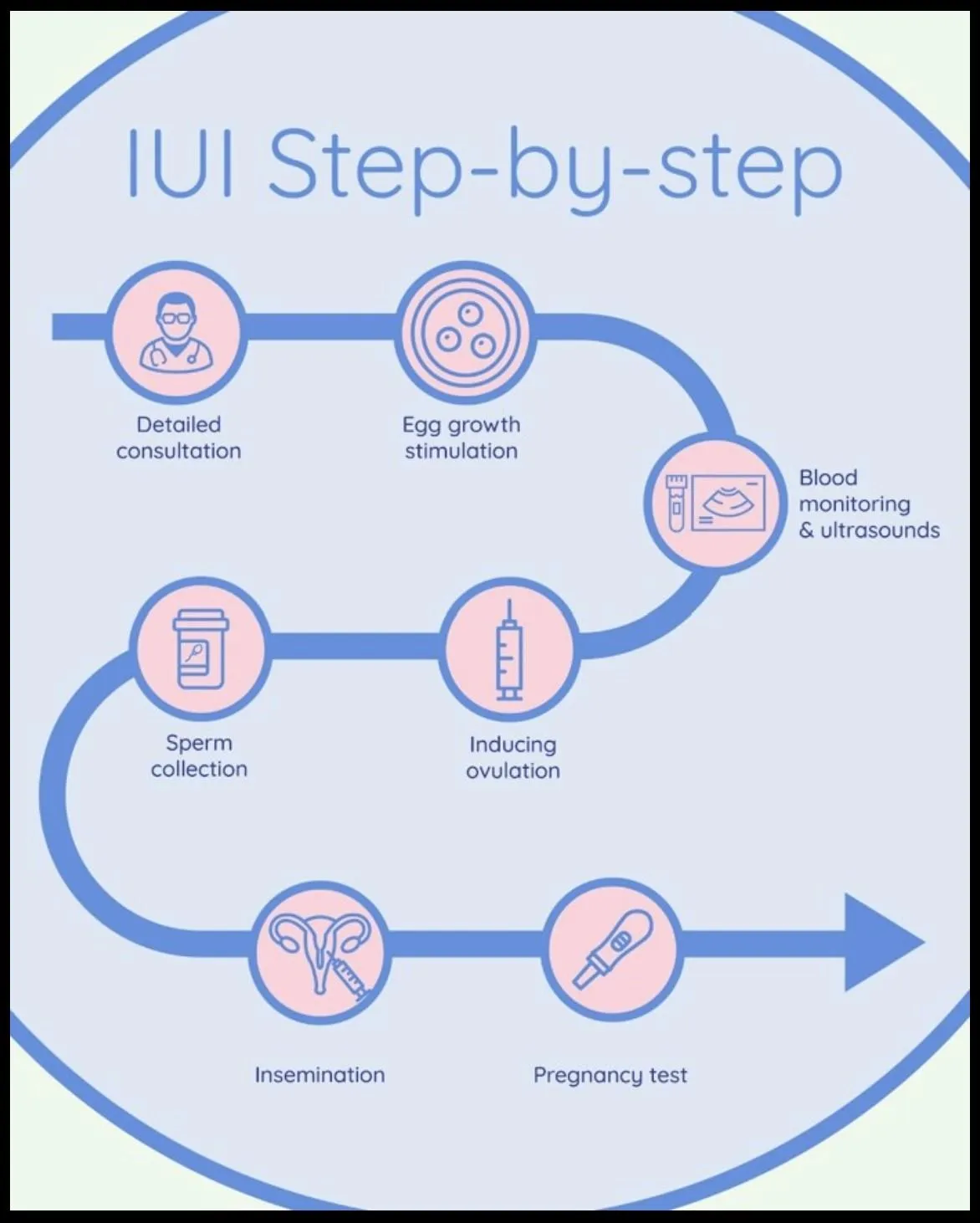
👣 Step-by-step overview of a typical IUI cycle:
Ovulation tracking or induction (with or without medication)
Semen sample collection (from partner or donor)
Sperm washing (removes debris, increases motility concentration)
IUI procedure (a thin catheter places sperm into the uterus)
Post-IUI support or progesterone, if needed
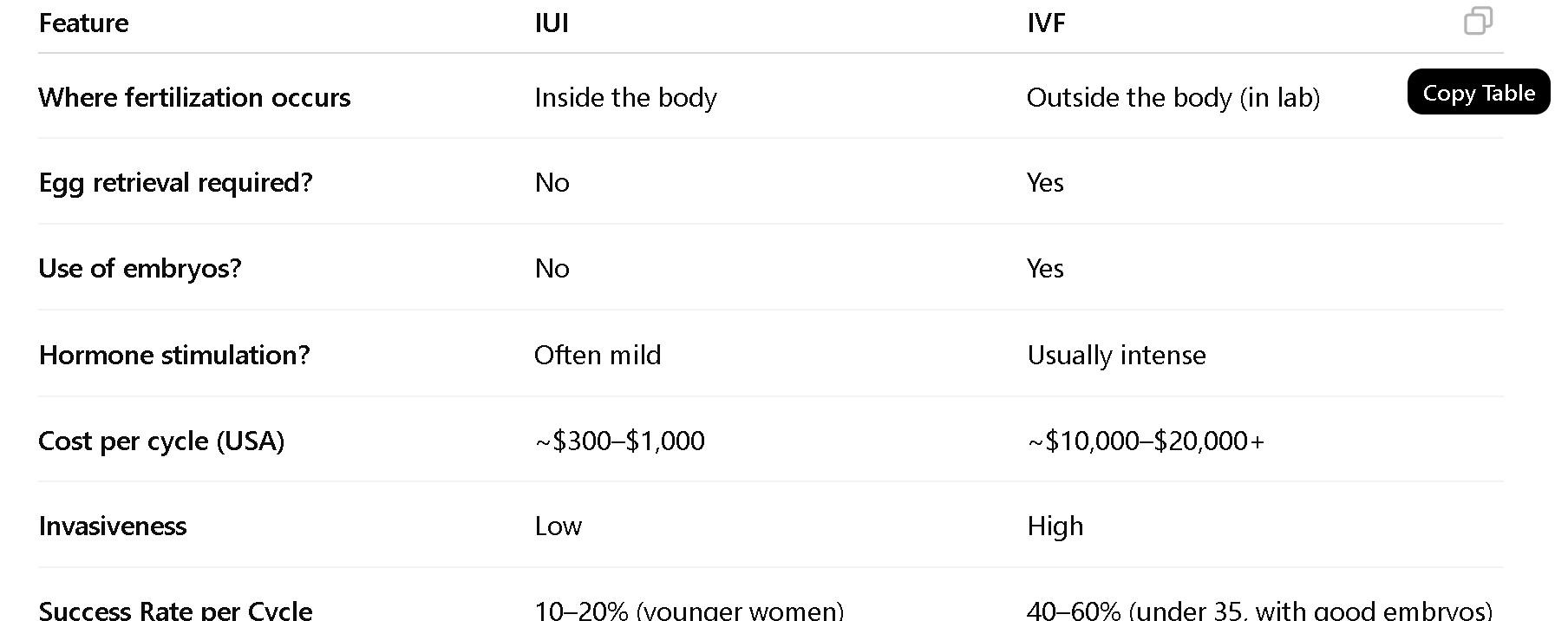
🔬 IUI vs IVF: What’s the Difference?
Though both are fertility treatments, IUI and IVF are fundamentally different in how and where fertilization takes place.
🧭 When Is IUI Used?
IUI is often the first medical fertility treatment considered in cases of:
Unexplained infertility
Mild male factor infertility (low count or motility)
Cervical factor infertility
Sexual dysfunction or same-sex couples using donor sperm
Women using donor sperm to conceive as a single parent
💡 Final Thoughts
IUI doesn’t work for everyone—but for many couples, it’s a logical and affordable step to try before moving on to IVF. It’s quick, usually painless, and requires fewer medications and office visits. As we continue this series, we’ll explore how medicated and natural IUI cycles differ, what to expect with each, and what testing is needed to prepare.

